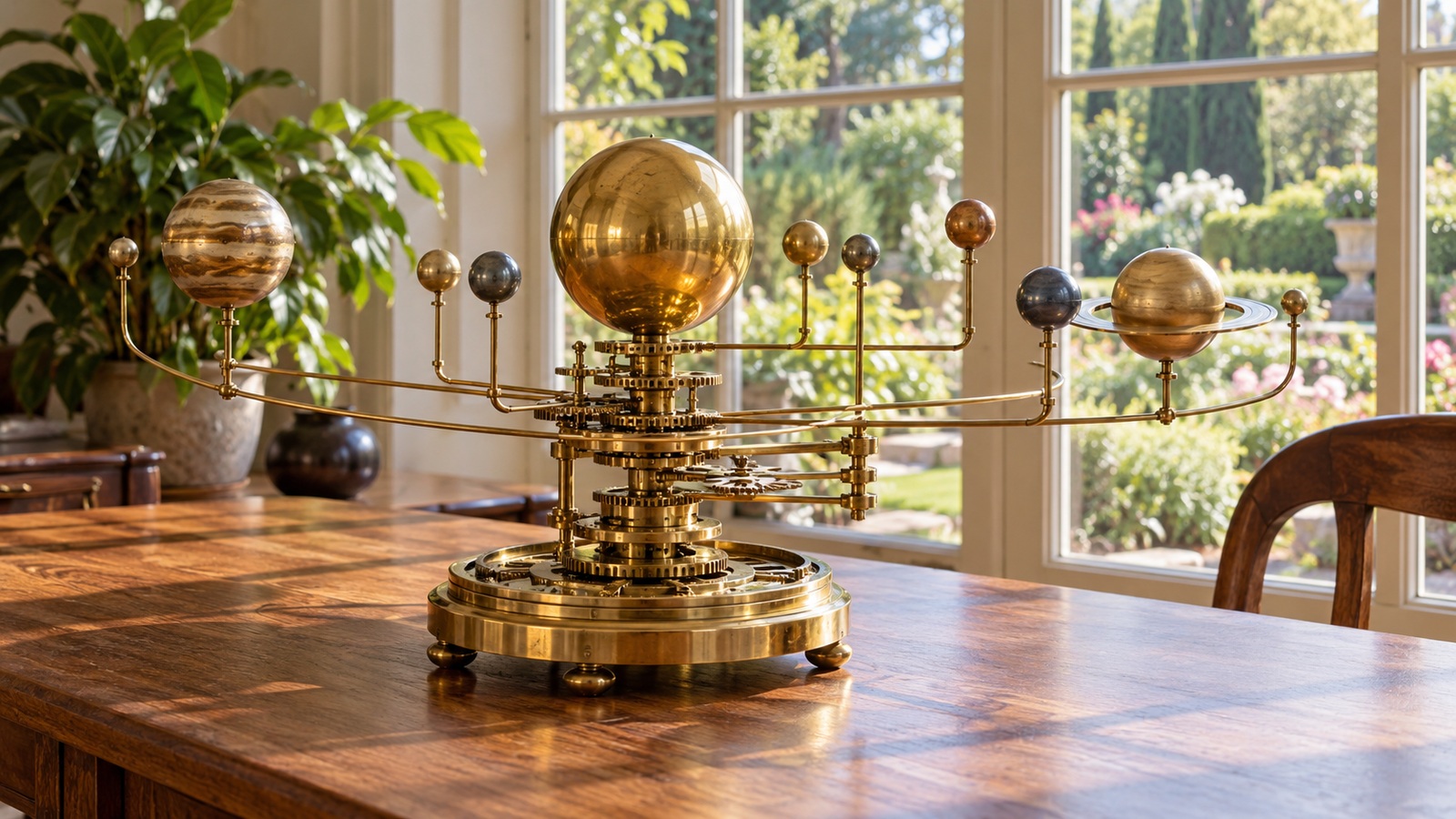
A Reference to the Zodiac’s Twelve Symbolic Characters
The zodiac is easier to understand when the signs are read as parts of a system rather than twelve unrelated personality lists. Each combines an element, a modality, a symbol, and a planetary rulership, producing a particular set of themes in astrological interpretation. This reference uses the Western tropical zodiac and gives familiar approximate Sun-sign dates. Those dates are a quick guide, not a substitute for calculating the Sun’s exact position near a boundary. A sign describes a placement in a chart; it does not establish every trait of everyone born in a particular month. Read the portraits as symbolic starting points, with room for individual experience and other chart factors. Along the way, notice how signs can share an element while expressing it through different approaches to beginning, sustaining, or changing something.
A: They are familiar approximate tropical Sun-sign ranges.
A: Actual ingress times vary by year and local time zone.
A: The Sun has one zodiac position at the birth moment.
A: Aquarius belongs to air.
A: Traditional and modern conventions use different associations.
A: No. It describes a symbolic modality, not a personal incapacity.
A: The twelve signs each occupy thirty degrees in these zodiac frameworks.
A: Yes, while remaining a different factor with a different interpreted role.
A: No. Treat the portrait as a starting vocabulary and include exceptions.
A: Identify a placement's basic classifications before exploring its context.
A Compact Twelve-Sign Lookup Beside the Detailed Portraits
The dates below are approximate tropical ranges. Check the actual year’s solar ingress near a boundary. Element and modality organize the sign, while the placement being read still supplies its own function. Use the individual portraits to explore a theme after locating its classifications. A Sun, Moon and ascendant in the same sign remain different factors. A real example and an exception can show where the description helps, while keeping the person more complex than a reference row.
| Sign | Approximate dates | Element | Modality |
|---|---|---|---|
| Aries | March 21–April 19 | Fire | Cardinal |
| Taurus | April 20–May 20 | Earth | Fixed |
| Gemini | May 21–June 20 | Air | Mutable |
| Cancer | June 21–July 22 | Water | Cardinal |
| Leo | July 23–August 22 | Fire | Fixed |
| Virgo | August 23–September 22 | Earth | Mutable |
| Libra | September 23–October 22 | Air | Cardinal |
| Scorpio | October 23–November 21 | Water | Fixed |
| Sagittarius | November 22–December 21 | Fire | Mutable |
| Capricorn | December 22–January 19 | Earth | Cardinal |
| Aquarius | January 20–February 18 | Air | Fixed |
| Pisces | February 19–March 20 | Water | Mutable |
How to Use Dates, Elements, and Modalities Together
Tropical signs are twelve equal sectors of thirty degrees, beginning with Aries at the March equinox. Their boundaries are different from astronomical constellation boundaries. The Sun’s entry into a sign occurs at an exact moment that varies by year and appears on different local clock times around the world. If your birthday falls near a listed transition, calculate the position using the actual year and time information.
Elements organize signs into fire, earth, air, and water. Modalities describe a symbolic pattern of initiating, maintaining, or adapting, called cardinal, fixed, and mutable. Combining element and modality distinguishes, for example, cardinal-fire Aries from fixed-fire Leo and mutable-fire Sagittarius. Neither label is a measure of a person’s worth. Each combination offers a different question about how a theme might be expressed.
Aries: Starting Before Everything Is Settled
Aries is cardinal fire, symbolized by the ram and ruled by Mars. Its approximate dates are March 21 through April 19. The central image is initiative: making the first approach, trying the unfamiliar task, or bringing a stalled discussion into motion. That symbolism can describe courage and useful directness, while also raising questions about pace and patience. Beginning something does not automatically make the decision wise, and waiting does not automatically show a lack of nerve. When reading an Aries placement, ask what is being initiated and what support would help the initial effort become sustainable. The answer depends on the placement and the person’s circumstances, rather than a universal assumption that Aries people are always loud or competitive.
Taurus: Giving Value a Lasting Form
Taurus is fixed earth, represented by the bull and ruled by Venus. Its approximate dates are April 20 through May 20. Its symbolism emphasizes continuity, tangible value, and the experience of inhabiting a dependable world. A well-made object, an established routine, or time spent enjoying a place can express the theme without implying that everyone with Taurus placements has identical tastes.
The useful tension is between preserving value and preserving an arrangement simply because it is familiar. Ask which part deserves protection and which part could change without losing what matters. Taurus symbolism can support patience and care for resources, but it cannot establish that a person is materialistic, immovable, or uninterested in new experiences.
Continuity can include gradual revision. A familiar garden can change each season while preserving the care that makes it valuable. This is a helpful distinction when a Taurus theme is reduced to resistance. The symbolic question concerns how value is sustained, which may call for alteration rather than keeping every detail the same.
Gemini: Making Room for Another Account
Gemini is mutable air, symbolized by the twins and ruled by Mercury. Its approximate dates are May 21 through June 20. The sign’s themes include exchange, curiosity, comparison, and the ability to move between perspectives. Imagine someone asking how two accounts of the same event differ, then looking for the missing detail. That can be a productive expression of the symbolism. The corresponding question is how exploration reaches a conclusion when a decision is required. Several viewpoints need not imply dishonesty, and a quiet person can still relate strongly to the sign’s intellectual flexibility. Read Gemini as a way of engaging information, rather than proof that a person must be sociable, inconsistent, or constantly talking.
Cancer: Creating a Place of Belonging
Cancer is cardinal water, represented by the crab and ruled by the Moon. Its approximate dates are June 21 through July 22. Its imagery brings together emotional investment, protection, memory, and the creation of a place that feels personally meaningful. Belonging might involve family, but it can also involve friendships, chosen communities, or the private routines through which someone feels at home.
The question is how care can be offered without assuming ownership of another person’s choices. A protective impulse may help establish safety and welcome, while still needing clear boundaries. Cancer symbolism does not determine whether someone wants children, maintains a close family relationship, or expresses feelings openly. Actual preferences and history deserve their own account.
Leo: Giving Personal Expression a Visible Shape
Leo is fixed fire, symbolized by the lion and ruled by the Sun. Its approximate dates are July 23 through August 22. Themes of creativity, generosity, visibility, and personal authorship are common in its interpretation. Visibility need not mean a stage or a large audience; it can mean taking responsibility for a contribution and allowing it to carry your individual style. The reflective challenge is to distinguish recognition from constant approval. A person can value being seen fairly while accepting that other people will have different responses. Leo symbolism is therefore more useful as a question about expression and acknowledgment than as a verdict that someone must be dramatic, confident, or determined to lead every room.
Virgo: Improving What Is Actually in Front of You
Virgo is mutable earth, represented by the maiden and ruled by Mercury. Its approximate dates are August 23 through September 22. Its symbolic territory includes observation, discrimination, practical refinement, and the work of making a process function better. A small adjustment that saves time or reduces confusion can express this pattern as clearly as an elaborate organizing project.
Refinement raises a question about proportion. Which improvement helps, and which detail is consuming attention beyond its value? Virgo is not a guarantee of tidiness, a particular occupation, or a critical temperament. Interpret the placement through the actual task and ask whether the attention being invested supports a usable result.
There is also a difference between noticing an imperfection and choosing to address it. Time and energy are limited resources, and useful discrimination includes deciding what can remain unfinished. That is a more flexible expression of refinement than demanding a flawless result. The person’s actual priorities should guide which improvements deserve attention.
Libra: Negotiating a Relationship Between Perspectives
Libra is cardinal air, represented by scales and ruled by Venus. Its approximate dates are September 23 through October 22. Its themes concern relationship, proportion, comparison, and the deliberate creation of agreements. Considering another perspective can improve judgment, especially when a decision affects more than one person. The difficulty is that a pleasant conversation and a fair arrangement are not automatically the same thing. A Libra placement can prompt questions about whose interests are being represented and how an agreement is reached. It cannot prove that a person is indecisive, romantically motivated, or incapable of acting alone. Balance is an ongoing judgment about context, rather than a requirement that every difference be split exactly in half.
Scorpio: Following a Matter Beneath Its Surface
Scorpio is fixed water, symbolized by the scorpion. Mars is its traditional ruler; Pluto is commonly used as a modern ruler. Its approximate dates are October 23 through November 21. Interpretive themes include depth, privacy, sustained emotional investment, and questions about trust or shared stakes. These are symbolic concerns rather than evidence that a person possesses hidden knowledge of others.
The useful distinction is between careful attention and a demand for impossible certainty. A placement can invite someone to consider what trust would require in a specific situation. It does not justify suspicion, control, or treating privacy as proof of deception. Depth becomes more constructive when it leaves room for consent and an honest acknowledgment of what remains unknown.
Sagittarius: Connecting Experience With a Wider View
Sagittarius is mutable fire, represented by the archer and ruled by Jupiter. Its approximate dates are November 22 through December 21. Themes of exploration, conviction, learning, and broad horizons shape its usual portrait. Travel can provide one expression, but a person can explore a wider world through study, conversation, or changing an established assumption. The reflective question is how a broad belief responds to a particular fact that complicates it. Enthusiasm can open a possibility while still needing attention to practical details. Sagittarius symbolism cannot establish that someone is always optimistic, tactless, adventurous, or unwilling to commit. It is more useful for examining how a placement seeks meaning and remains open to a larger account.
Capricorn: Building Something That Can Carry Weight
Capricorn is cardinal earth, represented by the sea-goat and ruled by Saturn. Its approximate dates are December 22 through January 19. Responsibility, organization, boundaries, and the construction of durable results belong to its symbolic vocabulary. A Capricorn theme might appear in the patient establishment of a workable routine just as readily as in a visible professional ambition.
The important question is what the structure serves. A plan can support valued commitments, or it can become so demanding that the original purpose disappears. Neither seriousness nor success can be assumed from a sign. Look at actual choices, available resources, and the person’s definition of a worthwhile result before assigning a story about ambition or restraint.
Responsibility can also include declining work that cannot be carried out well. A realistic limit may protect a commitment more effectively than another ambitious promise. This offers a useful counterpoint to a portrait built entirely around achievement. In a reading, ask what can actually be supported over time and whose effort the proposed structure assumes.
Aquarius: Examining the Arrangement From Another Angle
Aquarius is fixed air, symbolized by the water-bearer. Saturn is its traditional ruler; Uranus is commonly used in modern astrology. Its approximate dates are January 20 through February 18. Despite its watery symbol, it belongs to the air element. Its themes include systems, principles, groups, and perspectives that question a familiar arrangement. That perspective can reveal an assumption others have stopped noticing. The corresponding challenge is to test a principle against the lives of the people affected by it. Aquarius symbolism does not establish emotional detachment, political views, or a particular relationship to technology. Ask how an idea is being sustained and whether it remains responsive to actual experience.
Pisces: Allowing Experience to Be More Than One Thing
Pisces is mutable water, represented by two fish. Jupiter is its traditional ruler; Neptune is commonly used as a modern ruler. Its approximate dates are February 19 through March 20. Imagination, sympathy, porous boundaries, and the ability to recognize overlapping meanings are familiar symbolic themes. They can describe an artistic possibility or a willingness to consider another person’s experience.
Openness still needs practical definition. Understanding several feelings does not settle who is responsible for an action or what agreement has been made. Pisces symbolism cannot prove exceptional intuition, helplessness, or a tendency to escape. A more useful reading asks how sensitivity or imagination can coexist with clearly named limits and the ordinary details needed to act.
Rulership Adds a Connection, Not a Second Birthday Sign
A ruling planet is a traditional association used in chart interpretation. It neither replaces the sign nor implies physical control. Traditions differ over modern rulers for Scorpio, Aquarius, and Pisces. Keep the convention explicit. Dates likewise remain approximate: the familiar ranges in this article’s table are useful for orientation, while a boundary birth requires the year’s actual solar position. Near a boundary, the Sun still occupies one sign. For the wider framework behind the table, the beginner’s explanation of astrology distinguishes a zodiac convention, a calculated position, and the meaning a reader assigns to it.